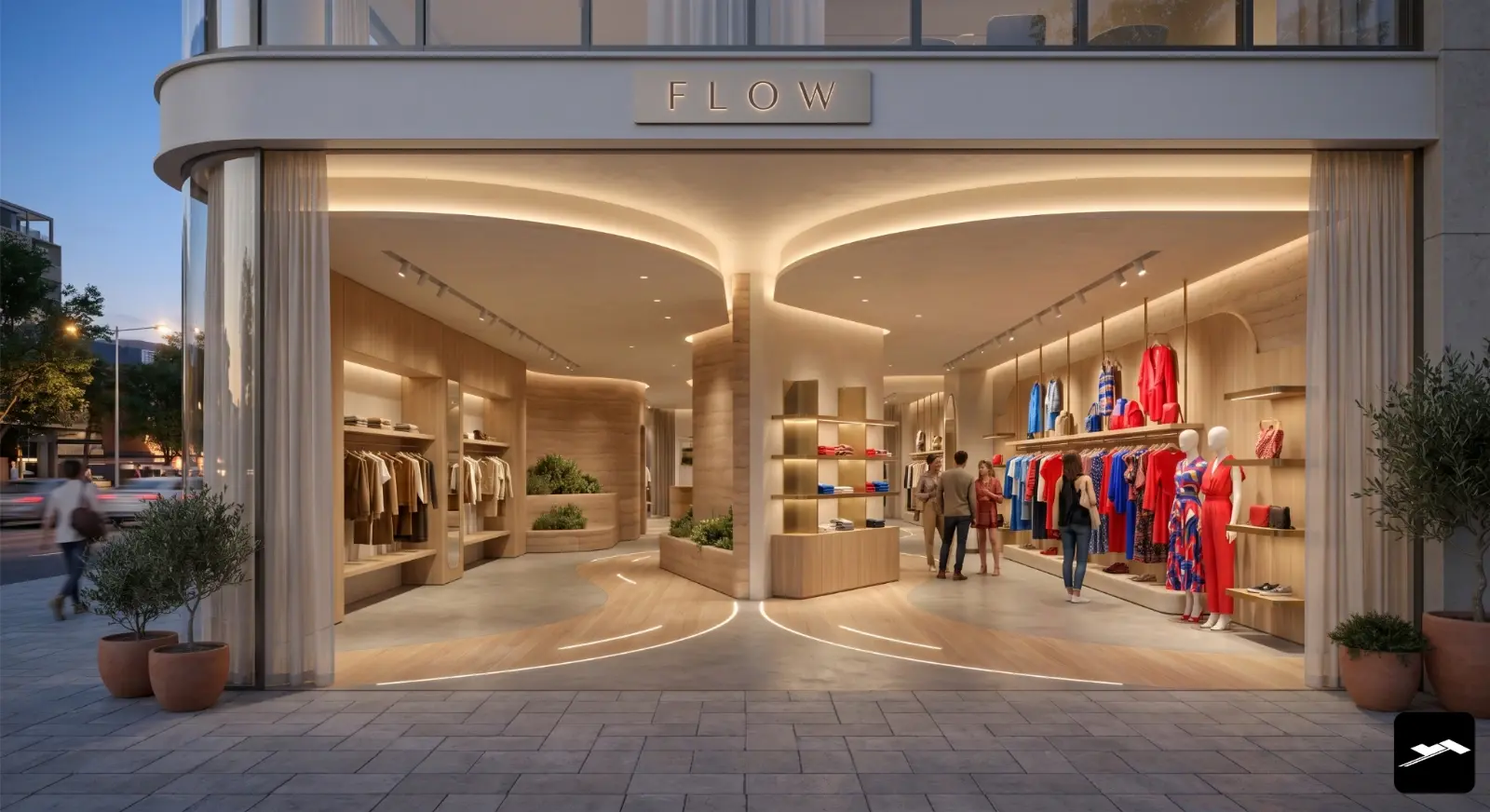
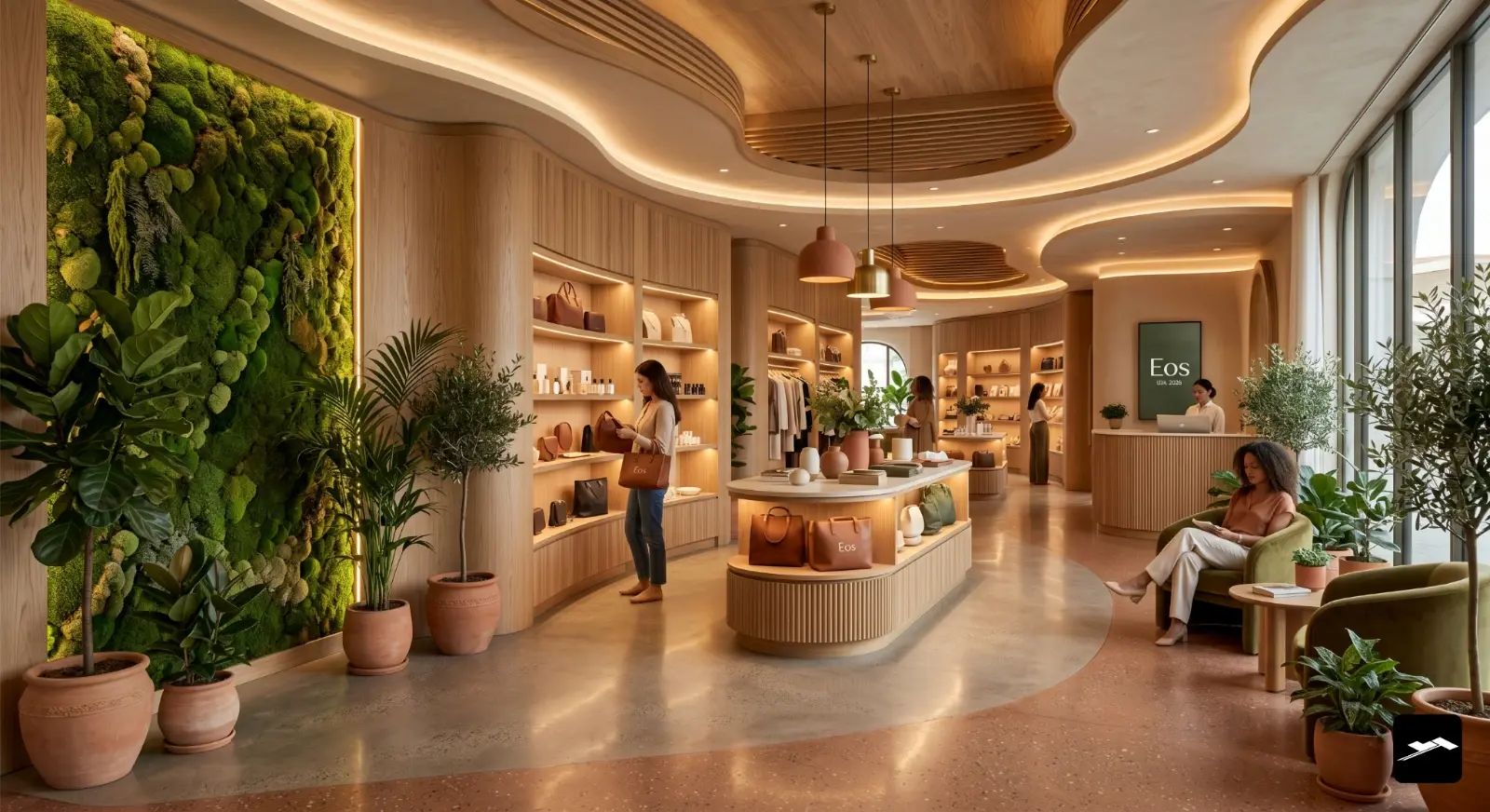
In the modern retail world, a physical store is no longer just a space where products are displayed; it has transformed into an "experience center" that reflects the brand's identity. Recent research on neuroscience and consumer psychology proves that 95% of purchasing decisions are driven by subconscious mechanisms. Store design trends for 2026 focus precisely on this point, using architecture not just as an aesthetic tool, but as a "neuroarchitecture" strategy that directly boosts sales.
Customer Flow and Navigation Psychology When a customer steps into a store, their steps are not random. Scientific data shows that people have a natural, subconscious reflex to turn right upon entering a space.
Multisensory Stimulation: Light, Sound, and Scent In 2026, stores appeal not only to the eyes but to all the senses. Lighting is the most powerful tool for setting a store's mood. Warm lights (2700K - 3000K) create a feeling of trust and relaxation in the customer, while cool white lights emphasize dynamism and modernity in technology or sportswear stores.
Alongside visual design, acoustic planning is of vital importance. Slow-tempo music extends the time customers spend in the store, encouraging detailed product examination, while fast rhythms increase physical movement and trigger quick purchase decisions.
Color Psychology and Return to Nature (Biophilic Design) In the future of retail, sterile and cold spaces are being replaced by nature-inspired designs. In 2026, relaxing color palettes such as earth tones, olive green, and terracotta dominate retail interior design.
As Yapıtek Mimarlık, creating flawless brand experiences in the store projects of national and international brands like Levi's, Yalı Spor, and Mithat, we combine aesthetics with sales engineering.